The addition or removal of top predators creates reciprocal changes in populations of predator & prey through a food chain, affecting ecosystem structure & nutrient cycling.
Land plants generate small air-borne particles called aerosols that contain microorganisms that influence the formation of clouds by their ice nucleation properties.
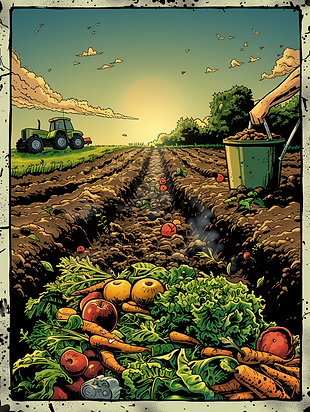
Technologies & systems to reduce food waste decrease emissions from decomposition & transport, improving economies & community access to nutritional resources.
A local electrical grid with defined boundaries that can operate in grid-connected & off-grid modes, mobilizing renewable energy & storage capacities for resilience & versatility.
Planted to protect & enrich soil rather than for direct harvest, cover crops increase fertility & biological activity, reducing erosion, suppressing weeds & pests.
Through pyrolysis, plant matter is activated as a soil amendment to benefit microbial health & store carbon, with applications for improving water quality & land reclamation.
Kelp forests support an astonishing array of biodiversity and provide essential ecosystem services that help mitigate & adapt to the impacts of climate change.
Protecting older & larger trees, which sequester large amounts of carbon, improves native biodiversity, water & air quality, and flood & erosion control.
The soil material used in this building method has little embodied energy, low carbon emissions & minimal pollution impacts, being sourced and manufactured locally.
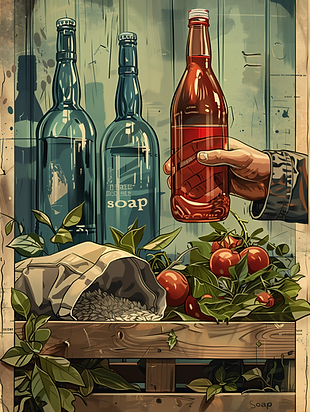
Designing packaging & systems for greater recyclability & compostability reduces resource consumption, waste & pollution while improving business economics.
By degrading petroleum hydrocarbons, heavy metals & other noxious chemicals, fungi are powerful bioremediation agents to counteract environmental pollution.
Growing food in cities, often in underutilized spaces like rooftops, backyards, and indoor vertical farms reduces emissions from food transportation & bolsters local economies.
A land use management system that integrates trees with crops or pasture, producing timber & wood products, fruits, nuts, edible mushrooms, medicinal plants and animal products.
Growing exponentially on degraded land, bamboo can be managed without pesticides or fertilizer, and sequesters significant amounts of carbon over short periods of time.
Converting appliances & machines to use electric power improves efficiency, reduces resource consumption & pollution while yielding economic savings & productivity.
Composting systems reduce methane emissions from anaerobic landfills; the amendment of soils with compost reduces erosion, holds soil moisture & improves crop yields.
Reducing imbalances between energy demand & energy production, an accumulator or battery stores energy using chemical, electrical or mechanical forces.
Restoring woodlands that have been damaged or destroyed, enabling ecosystem & habitat recovery, climate change mitigation, and future harvesting of forest resources.
Pedal-powered & electric bikes reduce fossil fuel reliance, improve community connectedness and benefit healthy lifestyles as an economic platform for mass mobility.
Provide essential resources like nectar, pollen, & shelter for pollinators, contributing to the overall pollination process necessary for plant reproduction & food production.
Windows, walls, and floors are made to collect, store, reflect & distribute solar energy, in the form of heat in the winter and reject solar heat in the summer.
Turbines convert the kinetic energy of wind into mechanical or electrical energy that can be used for power, bolstering renewable energy availability for greater grid stability.
Connected pathways that link protected areas & habitats, allowing movement of animals to find food, mates, and shelter while maintaining genetic diversity & ecosystem health.
Contrary to fast fashion industrial practices, slow fashion involves local artisans and the use of eco-friendly materials, reducing social and environmental damages.
Passive harvesting contains rain where it falls to infiltrate into the ground for landscapes & aquifer recharge while active harvesting stores rainwater in tanks.
Integrating renewable energy production, energy efficiency, passive heating & cooling features, water catchment & recycling and recycled building materials.
Grazing animals are a fundamental and necessary force of natural disturbance, stimulating biodiversity as they transfer nutrients & disperse seeds over wide areas.
An indigenous technology used to slow the flow of water, catch sediment & halt erosion, restoring riparian ecosystems and increasing groundwater recharge.
Properly stewarded fire can prevent larger, more dangerous wildfires and create ecological conditions for increased forest health, soil water retention, plant diversity and immunity.
When girls finish their education, cycles of poverty & oppression can be broken, leading to more resilient families & improving a nation’s health, food security & economy.
Restoring land to health can sequester large amounts of atmospheric carbon in the soil, support livelihoods, improve wildlife habitat & make groundwater available.
In addition to fruit, trees yield bark, leaves, twigs, seeds, pollen, roots, new growth, flowers & sap used for syrup, sequestering carbon protecting soil health & biodiversity.
By slowing the flow of water from rainfalls & snowmelt, beavers increase watershed health by increasing groundwater recharge & making water available over longer periods of time.
Through natural regeneration, agroforestry & tree plantations, afforestation sequesters carbon while improving the local climate through increased rainfall & wind mitigation.
Harnessing the Earth’s subsurface heat to generate emissions-free baseload & dispatchable electricity, which could supply 15% of the world’s electricity by 2050.
With no direct tailpipe emissions & greater overall energy efficiency than internal combustion vehicles, EVs can be charged with renewable energy for huge climate benefits!
Selecting plant varieties based on desirable qualities (productivity, weather & pest resistance, drought tolerance, flavor, etc.) to gather and store seeds for future propagation & sharing.
Worms consume organic material and produce compost as fertilizer, creating a sustainable cycle that reduces the amount of waste sent to landfills and improves soil health.

.png)